
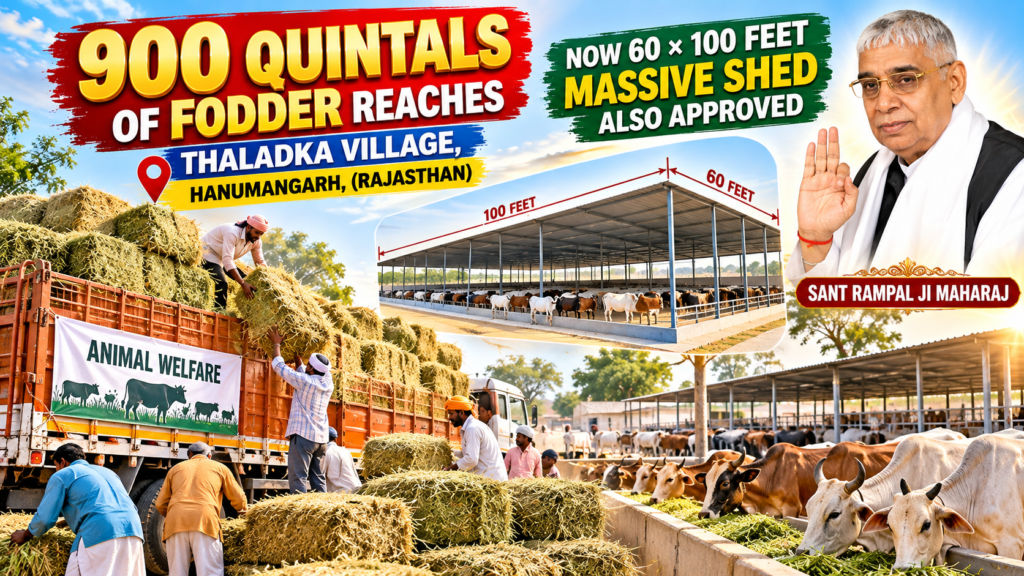
900 Quintals of Fodder Reaches Thaladka Village, Hanumangarh, Rajasthan; Massive 60 × 100 Feet Shed Also Approved by Sant Rampal Ji Maharaj
A Major Step Towards Animal Welfare and Cow Protection | SA News Channel
Thaladka, Hanumangarh, Rajasthan: In a significant development related to animal welfare, 900 quintals of fodder have reportedly been delivered to Thaladka village in Hanumangarh district, Rajasthan. In addition to the fodder supply, a massive shed measuring 60 × 100 feet has also reportedly been approved by Sant Rampal Ji Maharaj.
This initiative highlights the importance of providing food, shelter, and proper care for animals. The reported supply of fodder and approval of a large shelter structure are intended to address important needs associated with animal care and protection.
The development has drawn attention to the role of humanitarian assistance in supporting communities and improving the living conditions of animals that depend on people for their daily needs.
900 Quintals of Fodder Delivered to Thaladka Village
Fodder is an essential requirement for maintaining the health and well-being of cattle and other livestock. In places where animals depend on community-managed shelters or cow shelters for their daily food, maintaining an adequate supply of fodder is particularly important.
According to the information provided for this report, 900 quintals of fodder have reached Thaladka village in Hanumangarh, Rajasthan.
One quintal is equivalent to 100 kilograms. Therefore, 900 quintals represent approximately 90,000 kilograms, or 90 metric tonnes, of fodder.
Such a quantity can represent a substantial supply of animal feed. The period for which it will last depends on the number of animals, their individual dietary requirements, the type and quality of fodder, and the availability of other feed resources.
The reported delivery is an important development for the people responsible for arranging food for animals in the area. An adequate supply of nutritious fodder can help support animal health and reduce the pressure associated with arranging daily feed.
A Massive 60 × 100 Feet Shed Also Approved
Along with the reported fodder delivery, another important development is the approval of a large shed measuring 60 feet by 100 feet.
Based on these dimensions, the proposed structure would cover an area of approximately 6,000 square feet.
A properly designed shed can play an important role in animal welfare by providing protection from direct sunlight, rain, and other adverse weather conditions. Depending on its construction and facilities, it may also help create a more organized environment for feeding, resting, and caring for animals.
For cattle and other livestock, access to appropriate shelter is an important part of responsible animal management. Shelter requirements depend on factors such as the number and type of animals, ventilation, drainage, flooring, cleanliness, and access to water.
The reported approval of the 60 × 100 feet shed is therefore a significant aspect of this development. However, approval should not be confused with completion: the construction status, location, facilities, and expected completion date would need to be confirmed through the original report.
Sant Rampal Ji Maharaj and the Initiative for Animal Welfare
The reported fodder assistance and shed approval have been associated with Sant Rampal Ji Maharaj.
Animal welfare is an important social concern, particularly in rural areas where cattle and other livestock may depend on local communities, caretakers, and shelters for their daily requirements.
Initiatives involving animal feed and shelter can help address two fundamental needs: adequate nutrition and protection from the weather.
The reported assistance in Thaladka brings these needs into focus. While fodder provides an immediate resource for feeding animals, a well-planned shelter can offer a more lasting improvement in their living conditions.
For readers seeking additional information about Sant Rampal Ji Maharaj and reported social welfare activities, the official website can be consulted:
https://www.jagatgururampalji.org
Specific details about the Thaladka initiative, including the organizations involved, the beneficiaries, and the implementation timeline, should be checked against the original news report or official announcement.
Why Fodder Assistance Is Important for Animals
Adequate nutrition is essential for the health and well-being of cattle. Animals require appropriate feed, clean drinking water, suitable living conditions, and regular attention from caretakers.
When fodder is insufficient, animal caretakers may face difficulties in maintaining an appropriate feeding routine. This can affect animal health and increase the pressure on people responsible for their care.
Fodder assistance can help in several ways.
1. Supporting Daily Feeding Requirements
A reliable supply of fodder helps caretakers plan daily feeding and manage available resources more effectively.
2. Helping Maintain Animal Health
Appropriate feed is an important part of maintaining body condition and supporting normal bodily functions. The nutritional value of the fodder and the animals’ overall diet remain important considerations.
3. Reducing Pressure on Caretakers
Arranging sufficient fodder requires time, money, transportation, and storage facilities. Assistance with feed supplies may reduce some of these challenges.
4. Supporting Community Animal Care
When animals are cared for collectively, resources such as fodder, water, shelter, and veterinary attention become essential components of an effective management system.
The reported delivery of 900 quintals of fodder to Thaladka represents a substantial quantity of feed that can contribute to these objectives, subject to its distribution and actual use.
Why a Large Animal Shelter Matters
Food alone is not sufficient to ensure animal welfare. Animals also need a suitable environment in which they can rest and remain protected from harsh weather.
A shed measuring 60 × 100 feet would provide a planned area of 6,000 square feet. Its actual usefulness would depend on the design and the number of animals it is intended to accommodate.
A well-designed animal shelter should consider the following factors:
- Weather protection: Suitable roofing and design to reduce exposure to intense sunlight and rain.
- Ventilation: Adequate airflow to support a comfortable environment.
- Clean flooring: A suitable surface that can be cleaned and maintained safely.
- Drainage: Proper arrangements to prevent waterlogging and excessive moisture.
- Access to drinking water: Reliable access to clean water for all animals.
- Space for movement: Sufficient room for animals to stand, lie down, and move comfortably.
- Veterinary care: Access to appropriate medical attention when animals become ill or injured.
These facilities are important for maintaining cleanliness, reducing avoidable stress, and supporting the day-to-day management of an animal shelter.
The reported shed approval in Thaladka could therefore be an important step towards improving shelter infrastructure, provided the final construction meets the animals’ needs.
Thaladka Village in Hanumangarh, Rajasthan
Thaladka village is identified in the supplied information as being in Hanumangarh district of Rajasthan.
Rural communities often have close connections with livestock and animal husbandry. Caring for cattle requires a combination of food, water, shelter, labor, and appropriate veterinary services.
Where animals are maintained in a shared shelter or managed by local caretakers, these requirements can become a collective responsibility.
The reported fodder delivery and shed approval highlight the importance of coordinating resources to address animal welfare needs. Such efforts can be more effective when accompanied by responsible storage, transparent distribution, appropriate shelter management, and regular monitoring of animal health.
Further information about the local caretakers, the number of animals benefiting from the initiative, and the precise location of the proposed shed would help readers better understand its impact.
The Connection Between Animal Welfare and Social Responsibility
Animal welfare is closely connected with responsible community participation. People can contribute by helping arrange fodder, supporting the maintenance of shelters, ensuring access to clean water, and encouraging appropriate veterinary care.
Initiatives that address immediate needs as well as long-term infrastructure can be particularly valuable.
In the case reported from Thaladka, the two principal developments are:
Fodder assistance: The reported supply of 900 quintals provides a substantial quantity of animal feed.
Shelter infrastructure: The reported approval of a 60 × 100 feet shed introduces a plan for a structure covering approximately 6,000 square feet.
Together, these measures address two different aspects of animal care: nutrition and shelter.
Their lasting impact will depend on how the fodder is distributed, how the shed is constructed and maintained, and whether the animals receive adequate nutrition, water, space, and veterinary care over time.
The Importance of Continued Care and Management
Animal welfare requires ongoing attention rather than a one-time intervention. Even a large supply of fodder or the approval of a new shelter must be accompanied by effective management.
Some important measures include maintaining adequate feed storage, protecting fodder from moisture and contamination, providing clean drinking water, keeping shelter areas hygienic, and arranging timely veterinary examinations.
The shelter should also be designed according to the number and type of animals it will accommodate. A structure’s total floor area alone does not determine its suitability; ventilation, usable space, drainage, and daily management are equally important.
If these measures are implemented effectively, the reported assistance could contribute to better conditions for the animals in the area.
A Positive Message for Animal Protection
The reported development in Thaladka, Hanumangarh, Rajasthan, highlights the importance of making resources available for the care and protection of animals.
The delivery of 900 quintals of fodder addresses an immediate need, while the reported approval of a 60 × 100 feet shed focuses on shelter infrastructure.
Both food and shelter are essential elements of responsible animal care. Community awareness, practical assistance, and consistent management can help ensure that animals receive the attention and protection they require.
For readers interested in animal welfare and social service initiatives associated with Sant Rampal Ji Maharaj, further updates should be followed through reliable news reports and official announcements.
Conclusion
The reported arrival of 900 quintals of fodder in Thaladka village, Hanumangarh, Rajasthan, along with the reported approval of a 60 × 100 feet shed by Sant Rampal Ji Maharaj, highlights two important aspects of animal welfare: nutrition and shelter.
The fodder quantity amounts to approximately 90 metric tonnes, while the proposed shed would cover around 6,000 square feet.
These developments draw attention to the need for adequate animal feed, weather protection, proper shelter management, and continued care. The eventual benefits will depend on the implementation of the reported plans and the needs of the animals they are intended to serve.
Disclaimer: This article is based on the information supplied for the report. The delivery, approval, implementation status, and attribution have not been independently verified here. The original SA News Channel report or an official announcement should be consulted to confirm the details before publication.
Frequently Asked Questions (FAQs)
1. Where was the fodder assistance reported?
The reported assistance concerns Thaladka village in Hanumangarh district, Rajasthan.
2. How much fodder was reportedly delivered?
According to the supplied information, 900 quintals of fodder were delivered.
3. How many kilograms are there in 900 quintals?
Using the metric conversion of 100 kilograms per quintal, 900 quintals equal 90,000 kilograms, or 90 metric tonnes.
4. What size shed was reportedly approved?
The reported shed measures 60 feet by 100 feet.
5. What is the total area of the proposed shed?
A 60 × 100 feet structure has a floor area of 6,000 square feet.
6. Who is associated with the reported assistance?
The supplied headline associates the fodder assistance and shed approval with Sant Rampal Ji Maharaj.
7. Why is fodder assistance important?
Adequate fodder helps meet animals’ nutritional requirements and supports their overall health when combined with suitable water, shelter, and veterinary care.
8. Why is the proposed shed important?
A properly designed shed can protect animals from adverse weather and provide a suitable place for resting, subject to appropriate ventilation, drainage, space, and maintenance.